A true story from Kenya
About the Book
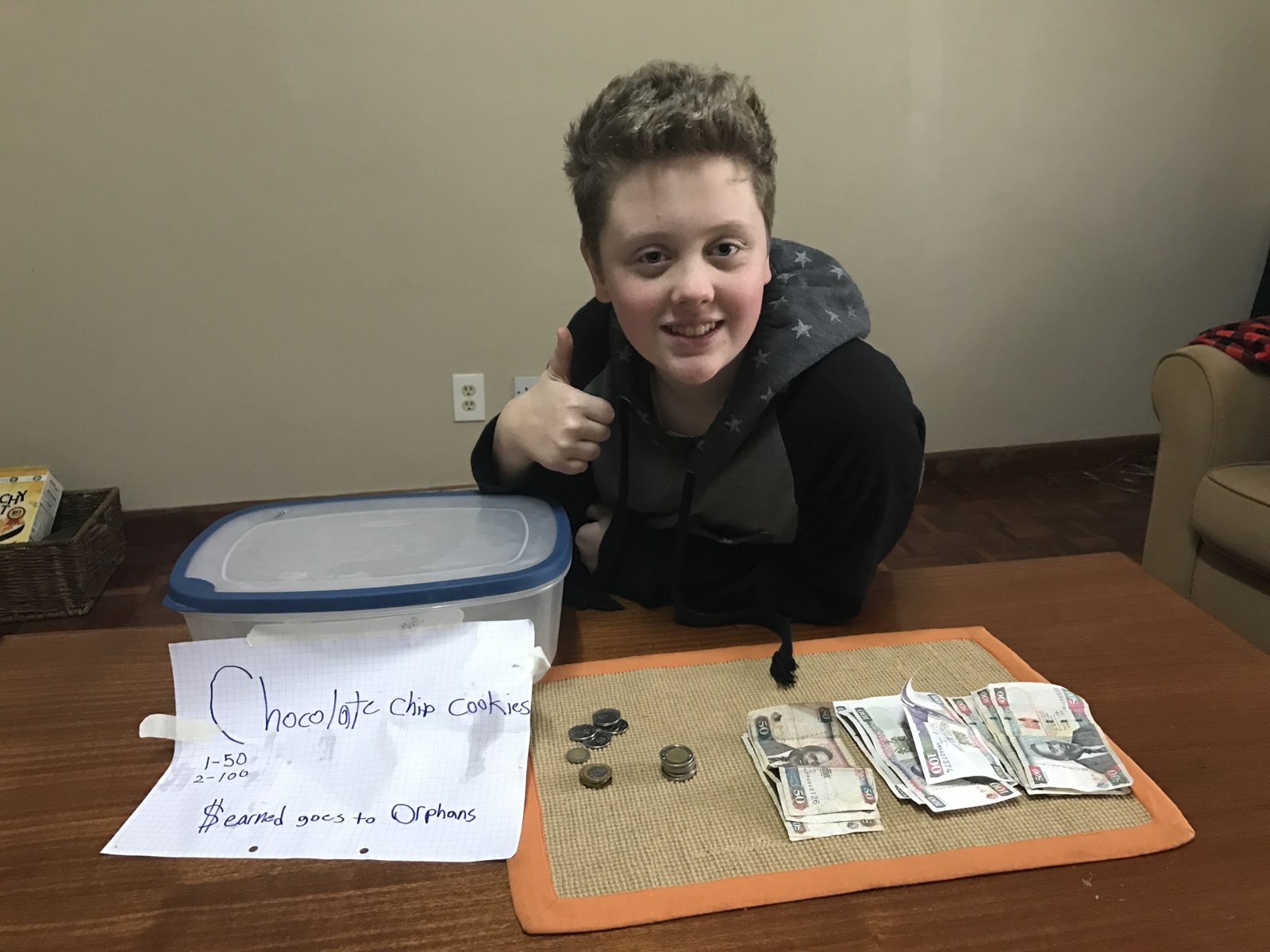
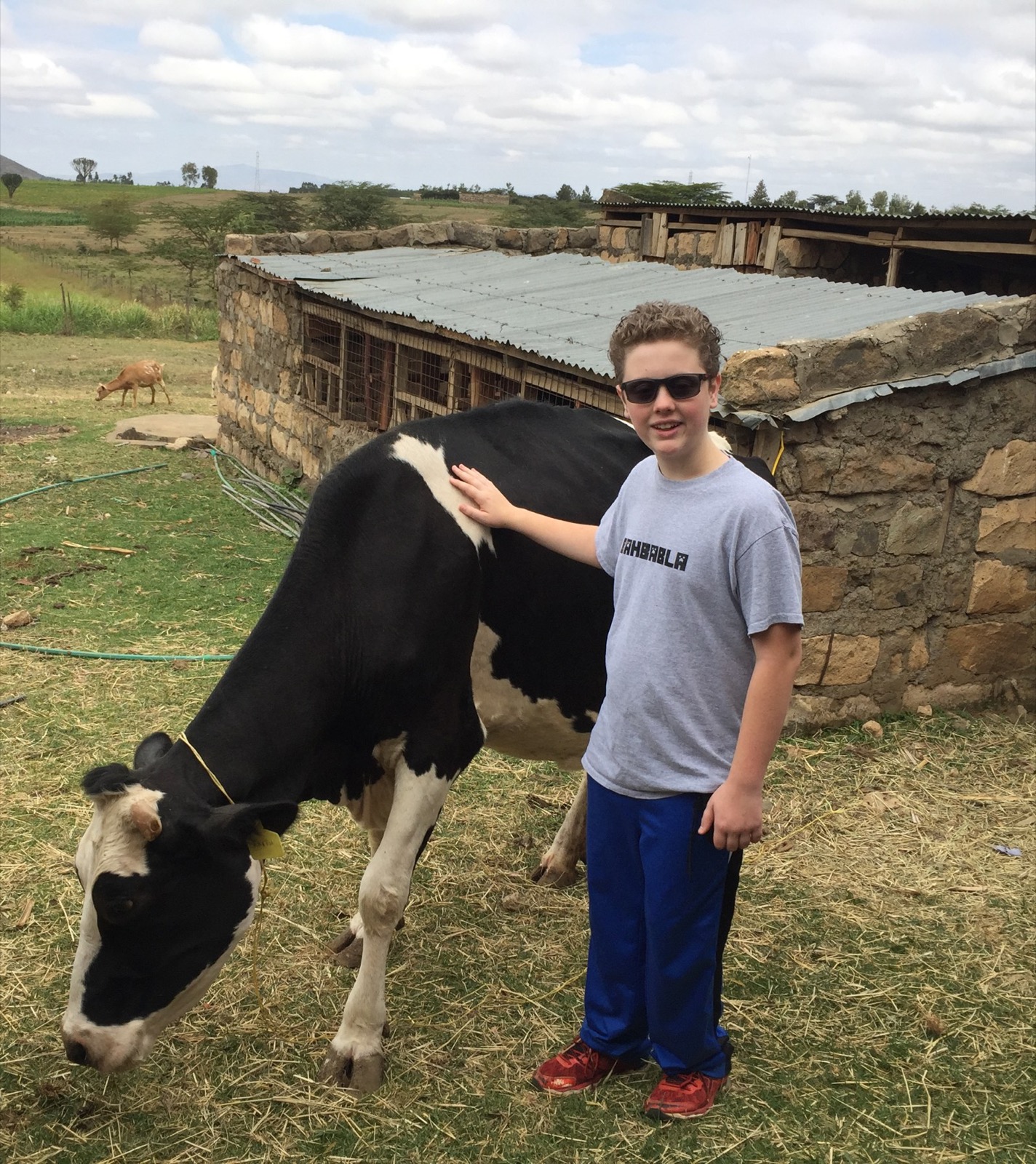
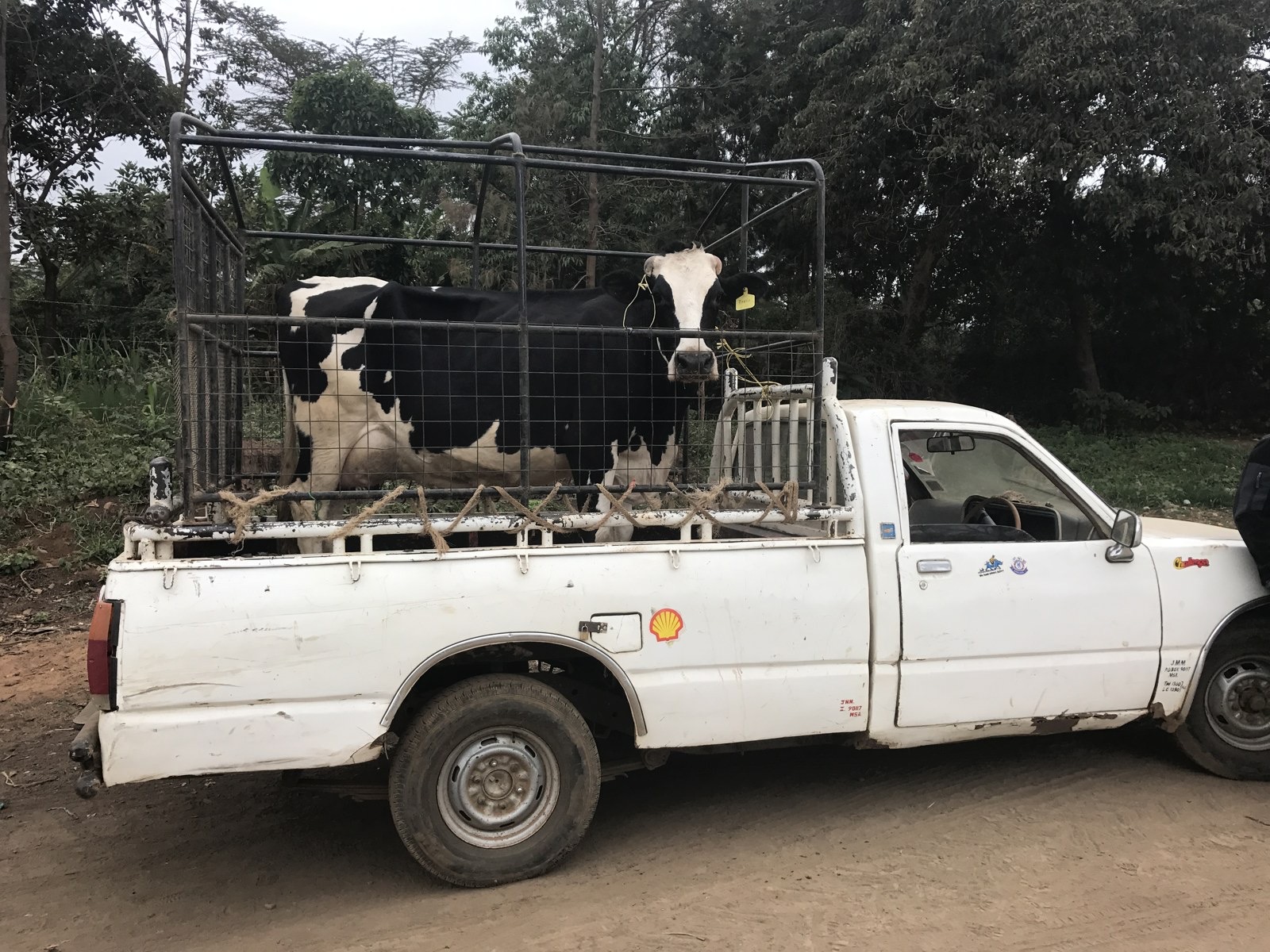
An email forwarded to a chemistry professor. A boy with Tourette’s and fourteen hundred chocolate chip cookies. A pastor in Kenya stepping out in faith, planting fields for cows he believed God would send. An orphanage whose cow had died. A cow named Faith.
Every piece started a long way from the others. God put them together.
Then, seven years later, the rain came.
Planted Before the Rain is a true story for anyone who has ever asked God why. It’s about saying yes before you understand, and about the one word that holds when everything else is hard to see: Yet.
Habakkuk 3:17–18
Includes a twelve-part Bible study.
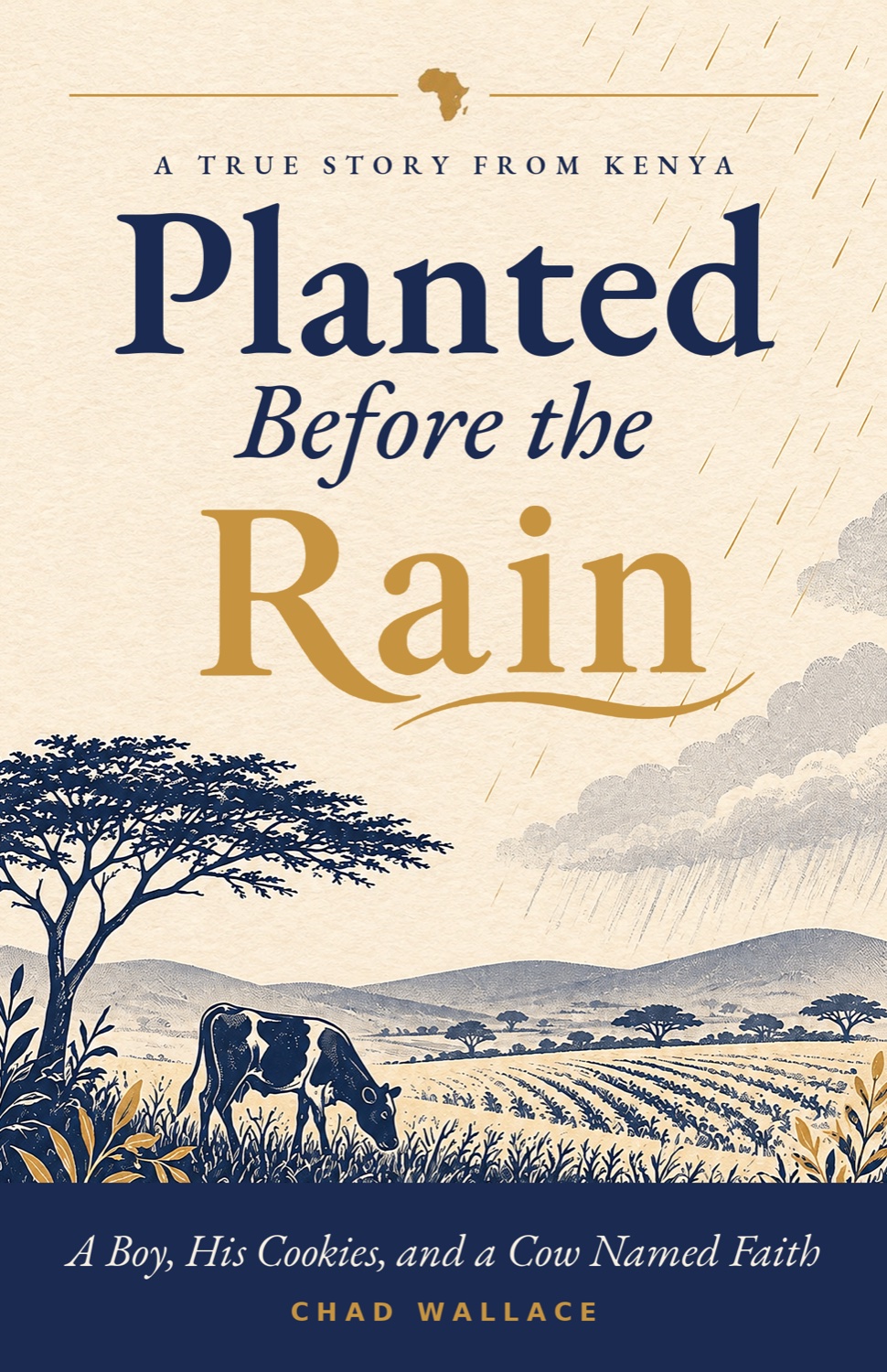
- Title
- Planted Before the Rain
- Subtitle
- A Boy, His Cookies, and a Cow Named Faith
- Author
- Chad Wallace
- Category
- Christian memoir
- Price
- $19.99
- Release
- Coming soon
Read a sample
Chapter One: The Ask
Of all the ways for God to get my attention, the last one I’d expect was an email forwarded to me. But He did just that in December 2016.
I was a chemistry professor. I had been teaching at a small Christian university in Indiana since 2000, and for the last few of those I’d been Dean of the School of Science and Engineering. At that time, with my job, I would get a lot of emails, most of them asking for a decision or advice. Some of them asked about my network. A struggling student needs a tutor, do I know somebody? An employer wants to know if I can think of an alumnus who’s looking for a job. This was one of those, from a colleague in the chemistry department. He asked, “Know of anyone?”
He had been roommates in college with a man named Mark Daubenmier, who taught at Rift Valley Academy in Kijabe, Kenya. He’s the principal there now. RVA is a K-12 boarding school that teaches the children of African missionaries, and they needed somebody to teach high school chemistry for their third term, three months.
My colleague wasn’t asking me for anything in particular. He was thinking of our graduates. Young chemistry alumni, a year or two out, no mortgage, no children, the sort of person who can vanish to East Africa for three months without dismantling a household. He wanted names, to see if I remembered anybody he may have overlooked. I wasn’t being asked to go. Nobody in that email thread had me in mind for one second.
I read it once, and I immediately said to myself in my head, I know how to teach chemistry. I think we’re supposed to do that.
Read the rest of Chapter One
I was a bit taken aback. Why did I say this to myself? I could, of course, teach chemistry. But why in the world did I think we were supposed to do that?
I didn’t think, We could look into that, or I wonder if… I sat at my desk and knew, in the way you know things you can’t defend, that we were supposed to go.
God was nudging me to go. It was a strong nudge, but I began to push it to the side. This is crazy. We can’t go to Kenya. But the nudge was still strong enough that when I got home that evening, I pulled out my phone in our dining room and read that email to my wife, Amy. I fully expected her to put an end to this impulse of mine. She would agree that it would be crazy for us to try to go to Kenya for three months. And, I knew the idea of doing mission work in Africa was not on her short list of how she would want to spend a summer.
When Amy and I were dating and starting to talk about getting married, she told me she was in for anything. If I wanted to teach, she was in. If I wanted to pastor a church, she was in. Whatever it turned out to be, she would go.
Just not African missionaries.
She had settled that a long time before she met me. As a girl she had told God she would follow Him anywhere He wanted her to go. Anywhere at all. Just not Africa.
She has never known why. Maybe it was just the farthest away a kid in Michigan could imagine. Maybe it was the lions.
At the time it was a throwaway line. It barely registered with me. I was a chemistry student with no intention of being a missionary anywhere, least of all Africa, and I’m not sure I thought about it again for twenty years.
And then, as I read that email, those early conversations with Amy came straight back to me, and I wondered why I was even reading it to her. Almost reluctantly, I was about to see if my wife thought we should go to Africa.
I didn’t get to finish reading the entire email on my screen when she interrupted me and said: I think we’re supposed to do that. Those were the exact words that popped into my head earlier: I think we’re supposed to do that.
She told me later what happened to her while I was reading. Her heart skipped. It hit her all at once and she was scared to death of it. And she said yes anyway, immediately, without sleeping on it. Even in her fear, she reached for the same sentence I had reached for at my desk, about a continent she had spent her whole life telling God she didn’t want to go to.
That’s usually how it comes for us. One of us gets something we can’t shake, and then the other one has it too, and at that point we stop contemplating and start packing.
Rift Valley Academy, the school we had just said yes to, sits in Kijabe, Kenya, about thirty miles northwest of Nairobi, on the upper escarpment of the Great Rift Valley. An escarpment is the long, steep wall that forms the side of the valley, so picture ninety acres of school perched on the edge of a mountainside, seven thousand feet up, with the floor of the valley a couple of miles below. Five hundred students go to school there, from thirty nationalities.
They call RVA the school in the clouds, and on a wet morning you see why. The cloud comes up the escarpment and settles on the campus and you walk to class through it. Kijabe comes from the Maasai for the place of the cold wind. Whoever named it had been there.
Then it was time to talk to the boys. So, we called them into the dining room to tell them about the great adventure we thought God was calling our family to in Africa. They didn’t see it that way.
Our older son Carson was fifteen, a freshman. Our younger son Mason was thirteen. Our daughter Ally was away at college by then, with a summer internship she couldn’t get out of, so it was going to be the four of us going. She would come later, for two weeks in the middle, with her boyfriend Luke.
The boys had questions. And the first one wasn’t about Africa or the adventure at all. It was a practical one:
You mean we would have to go to school over summer break?
Yes.
All day?
Yes.
We’re out. No thanks.
Amy and I had walked into that room thinking we were handing our sons the summer of their lives. They heard the words “school” and “summer” in the same sentence and it was over before it started.
You can’t argue with that. At fifteen and thirteen it’s airtight. We didn’t push it. We told them at least to think about it and pray about it, and we went to bed.
So that was where the first day ended. Two parents who had said yes to something neither of them could explain, and two boys who had said no thanks.
I sometimes think about how easily I could have said no to this whole thing. That email wasn’t about me. Nobody was expecting anything from me. All I had to do was forward it along to a few young alumni and go back to my day, and nobody in the world would ever have known the difference. That’s what I do with most emails.
And I nearly did. The thought in my head was small and it was quiet and it wouldn’t have taken much to talk myself out of it. I was even hoping my wife would be the reasonable one for us and help me say no. And my sons had good reasons not to want to go. Why would I put them through this? Is that fair? Would it be worth what it cost them?
And then I think about everything we’d have missed. Every person you’re about to meet is on the other side of a middle-aged professor deciding not to delete an email.
Saying yes didn’t mean we had any idea how to do it. We had nothing but questions. How does a man step away from his teaching and his duties as a dean for three months? We’d have to leave the week before finals week, so what happens to my exams? What do we do about the house, and the dog, and the money, because it would cost us more money than we had? Where would we even live over there?
And what about the boys? They were homeschooled. Would we be able to homeschool them there? Would they have to enroll at RVA? We didn’t know yet.
Underneath all of those questions was the big one. How does a family simply step out of its own life for this long? This isn’t a vacation. We’re talking twelve weeks, three whole months. You don’t put your life on a shelf for that long and pick it back up where you left it. We knew that.
That evening in our home, on paper, the whole thing was impossible, and both of us could see it was impossible, and I remember thinking we must be a little crazy to be sitting there considering it at all. And often, when we don’t know the answers, that’s when we would simply say no. We don’t know how to do this.
There’s one more way I’ve found I say no to God, and it’s the sneaky one. Maybe you use it too. This isn’t the right time for us. We never once said it.
That’s remarkable to me, because it wasn’t the right time for us. It was a terrible time for us. That sentence was sitting right there, it was completely true, and every person we told would have nodded and said of course, maybe in a few years.
We just didn’t reach for it. I can’t tell you why. We’ve used that sentence many times before and many times since. I’m only grateful we left it alone that once.
I don’t know why God picked our family. I’ll let you help decide the why. But He did, and He got our attention, and I’ll be grateful the rest of my life that we didn’t miss it.
Want to read what happened next?